Are My Symptoms Perimenopause, or Something Else?
You feel off, but nothing clearly explains why. Sleep is inconsistent. Energy is lower than it used to be. Your focus slips during the day.

Mood feels less stable. Workouts are less effective. Your body responds differently to the same routines that used to work, including unexplained weight gain.
These are common experiences for women in their 30s and 40s.
They are also some of the earliest signs that lead people to search for answers. The difficulty is that these symptoms can come from several different causes, and it is not always obvious which one is driving the changes.
Perimenopause is one possibility. It is the transitional phase before menopause, when hormone levels begin to shift. Estrogen and progesterone fluctuate, and those changes can affect sleep, mood, metabolism, and cognitive function. These changes do not happen all at once. They develop over time and often show up as patterns rather than a single clear symptom.
At the same time, many of these symptoms overlap with other conditions. Poor sleep can be related to stress, blood sugar instability, or lifestyle patterns.

Fatigue can come from thyroid issues, iron deficiency, or chronic stress. Brain fog and difficulty concentrating can be influenced by sleep quality, mental load, or metabolic factors. Mood changes can have multiple contributing causes as well.
This overlap is where confusion starts. A woman may recognize that something is different but not know whether it is perimenopause, another medical issue, or a combination of factors.
These symptoms are often dismissed or misattributed. It is common to hear that this is part of getting older, that stress is the main issue, or that nothing significant is happening. In many cases, no further evaluation is done. The result is that symptoms continue without a clear explanation or plan.
A more useful approach is to look for patterns.
Hormone-related symptoms tend to follow certain trends. They often develop gradually and persist over weeks or months. They may show up together rather than in isolation. Sleep disruption, especially waking during the night, may occur alongside mood changes or increased irritability. Fatigue may persist even with adequate rest. Weight gain or difficulty losing weight may happen despite consistent diet and exercise.. Cycles may become less predictable.
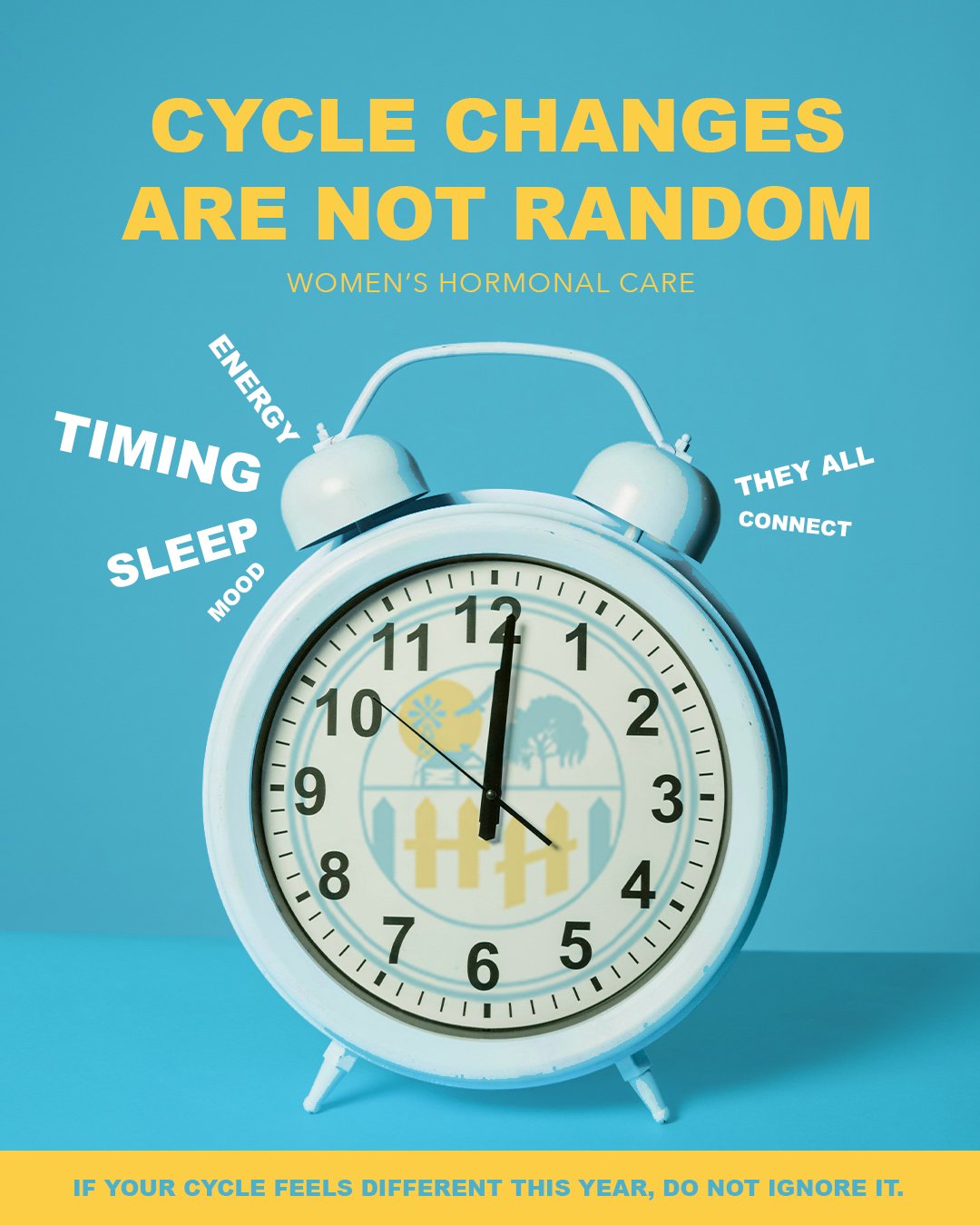
Timing also matters. For many women, these changes begin in the late 30s or 40s. That does not confirm perimenopause on its own, but it provides context.
When multiple symptoms appear together, follow a consistent pattern, and do not improve with basic changes, it is reasonable to consider whether hormonal shifts are contributing.
Many women try to manage these symptoms on their own first. Sleep supplements, dietary adjustments, increased exercise, or stress management techniques are common starting points. These can be helpful in some cases, especially when symptoms are mild or driven by lifestyle factors.
The limitation is that these approaches are often based on guesswork. Without understanding the underlying cause, it is difficult to choose the right intervention or know whether it is working for the right reason. Symptoms may improve temporarily or not at all, and the overall picture remains unclear.

A proper evaluation is designed to remove that uncertainty.
Instead of focusing on a single symptom, the evaluation looks at the full picture. This includes a detailed medical history, symptom timeline, and patterns over time. It also includes lab work when appropriate, to assess hormone levels and other factors that may be contributing, such as thyroid function or metabolic markers.

The goal is not to confirm one diagnosis quickly. It is to understand what is actually happening in the body, identify contributing factors, and determine whether perimenopause or another condition is responsible for the symptoms.
For some women, hormonal changes are the primary driver. For others, there may be multiple factors that need to be addressed together. In both cases, a structured evaluation allows for a plan that is based on evidence rather than assumptions.
This approach is especially important when considering treatment. Hormone therapy can be appropriate for some women, but it is not the starting point for everyone. The decision depends on symptoms, medical history, timing, and individual risk factors. Without a clear evaluation, it is difficult to make that decision with confidence.
At Homesteady Health, women in Ithaca, Trumansburg, and surrounding areas are evaluated using a structured, individualized process.

The focus is on understanding symptoms in context, using both clinical history and lab data when needed, and building a plan that reflects each patient’s situation.
If you are experiencing ongoing symptoms and are unsure whether they are related to perimenopause or something else, it may be time to look more closely at the underlying cause.
A clear evaluation can help determine what is driving these changes and what options make sense moving forward.
Learn more here or schedule a consultation, you can reach out to begin a hormone evaluation.