
By Matthew Simone, FNP-BC, board-certified Family Nurse Practitioner, 2025 Nurse Practitioner of the Year, and founder of Homesteady Health in Trumansburg, NY. Medically reviewed by Matthew Simone, FNP-BC.
Key takeaways
- Sermorelin, HGH, and TRT are three different therapies that are often confused because they all affect energy, body composition, and recovery. They are not interchangeable.
- Sermorelin is a peptide that signals your own pituitary gland to make more of your natural growth hormone, keeping your body’s normal feedback loop in place.
- HGH (human growth hormone) is synthetic growth hormone given directly. It is more potent, more tightly regulated, and carries more risk, with tightly limited approved uses.
- TRT (testosterone replacement therapy) treats a different problem entirely: clinically low testosterone, confirmed by lab work and symptoms.
- Which one, if any, is right for you is decided in a consultation based on your symptoms and lab results. None of these are automatic, and results vary from person to person.
Sermorelin vs. HGH vs. TRT: what is the difference?
Sermorelin, HGH, and TRT target different hormones in different ways. Sermorelin is a peptide that prompts your own body to release more growth hormone. HGH is synthetic growth hormone delivered directly into the body. TRT replaces testosterone when levels are clinically low. Sermorelin and HGH both act on the growth hormone system (one indirectly, one directly), while TRT acts on testosterone. They treat different deficiencies and are not substitutes for one another.
Sermorelin signals your body to make its own growth hormone, HGH is synthetic growth hormone given directly, and TRT replaces low testosterone. They act on different hormones and are not interchangeable.
| Sermorelin | HGH | TRT | |
|---|---|---|---|
| What it is | A peptide (GHRH analog) | Synthetic growth hormone (somatropin) | Testosterone (gel, injection, or pellet elsewhere; options vary) |
| How it works | Signals the pituitary to release your own growth hormone | Adds growth hormone directly, bypassing your own regulation | Restores testosterone to a healthy range |
| Hormone system | Growth hormone | Growth hormone | Testosterone |
| Typical reason to consider it | Age-related decline in growth hormone, recovery, sleep, body composition | Diagnosed growth hormone deficiency | Low testosterone with symptoms |
| Prescription | Yes, often compounded | Yes, tightly regulated | Yes |
What is sermorelin and how does it work?
Sermorelin is a peptide that mimics growth hormone-releasing hormone (GHRH), the natural signal your brain sends to your pituitary gland. Instead of adding growth hormone to your body, sermorelin encourages the gland to produce and release more of your own. Because it works through your body’s existing feedback loop, the release stays closer to your natural rhythm, which is part of why many clinicians view it as a gentler approach than synthetic growth hormone.
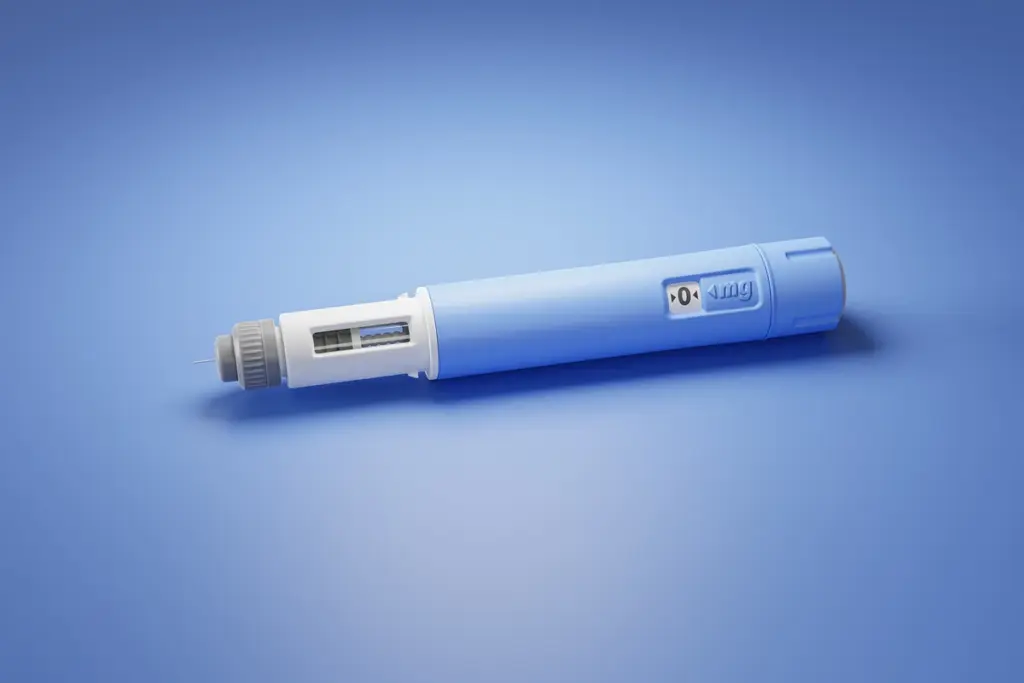
Sermorelin does not replace growth hormone. It prompts your own pituitary gland to make more of it, working within your body’s natural feedback system.
People most often ask about sermorelin for age-related concerns such as slower recovery, poorer sleep, lower energy, and changes in body composition, since the body’s growth hormone output naturally declines with age. Whether sermorelin is appropriate depends on your symptoms and lab work, and results vary. It is sometimes combined with a second peptide (such as ipamorelin) under a provider’s supervision, because the two can work on growth hormone release through complementary pathways. Any such plan should be individualized and monitored, never self-directed.
What is HGH, and how is it different from sermorelin?
HGH is laboratory-made growth hormone (somatropin) that is injected directly, so it raises growth hormone levels without relying on your pituitary gland. It is FDA-approved for specific medical conditions, most notably diagnosed growth hormone deficiency, and its use is tightly regulated. Because HGH bypasses your body’s own control system and is more potent, it tends to carry a higher risk of side effects than sermorelin and requires careful medical oversight.
The practical difference is control. Sermorelin nudges your body to make its own growth hormone within normal limits, while HGH delivers a set amount regardless of what your body would naturally produce. For that reason, many clinicians reserve HGH for clearly diagnosed deficiency and consider peptide approaches like sermorelin for optimization goals, always within what is medically and legally appropriate.
What is TRT, and when is it used?
TRT, or testosterone replacement therapy, restores testosterone in people whose levels are clinically low and who have matching symptoms, such as persistent fatigue, low libido, loss of muscle, brain fog, or low mood. It is a different hormone from growth hormone, so TRT addresses a different set of problems than sermorelin or HGH. Diagnosis relies on blood work (typically repeated testosterone measurements plus related markers) alongside how you actually feel.
TRT is one option among several for low testosterone, not an automatic answer, and it is not right for everyone. For a fuller picture, see our overview of testosterone replacement therapy and our guide to TRT cost in Ithaca, NY, or learn how we approach it on our men’s hormonal care page. Because low energy and low libido can also come from thyroid issues, sleep, stress, or other causes, a proper workup matters; our thyroid treatment page covers one common overlap.
Can sermorelin, HGH, and TRT be combined?
Because they act on different hormones, a growth hormone therapy and testosterone therapy are sometimes used together under medical supervision when both the growth hormone axis and testosterone are involved. Sermorelin and HGH, however, are two ways of addressing the same growth hormone system, so they are generally not used together. Any combination is an individual clinical decision based on your labs and goals, managed and monitored by your provider. This is not something to attempt on your own, and this article does not provide dosing or protocols.
How fast does each one work?
All three work gradually, and timelines vary by person. With sermorelin, people often notice better sleep and recovery first, within a few weeks, while changes in body composition tend to develop over several months of consistent use. HGH can act faster because it raises growth hormone directly, but that speed comes with greater risk and tighter oversight. With TRT, energy and libido may improve within a few weeks, while muscle and body-composition changes usually take a few months. None of these are instant, and consistency plus monitoring matters more than speed.
These therapies work gradually, not instantly. With sermorelin, sleep and recovery often improve within weeks, while body-composition changes develop over months. Results vary from person to person.
Side effects and safety
Every hormone therapy has trade-offs, which is why medical supervision and monitoring are essential. Side effects differ by therapy.
- Sermorelin is generally well tolerated; the most common issues are mild, such as redness or irritation at the injection site, flushing, or headache.
- HGH can cause fluid retention, joint or muscle aches, and effects on blood sugar, and it requires close oversight because of its potency.
- TRT can raise red blood cell counts, affect fertility, and cause acne or other changes, so it calls for regular lab monitoring.
This is a general overview, not a complete list, and it is not medical advice for your situation. A provider will review your personal and family history, weigh the risks and benefits with you, and monitor your response with periodic labs.
How candidacy is decided: labs plus symptoms
Deciding whether any of these therapies fits starts with your symptoms and is confirmed with lab work, never with a product chosen in advance. For the growth hormone system, that can mean markers such as IGF-1; for testosterone, it typically means repeated testosterone measurements plus related hormones. Just as important, a good evaluation rules out other explanations, since low energy, poor recovery, and low libido can stem from thyroid problems, poor sleep, stress, medication, or nutrition rather than a hormone that needs replacing.
At Homesteady Health, that evaluation is the starting point. As a direct primary care practice, we take time to understand the whole picture, order appropriate lab work (offered at discounted rates for members), and recommend a therapy only when the symptoms and the labs support it. The goal is the right treatment for you, which is sometimes a hormone therapy and sometimes something else entirely.
Cost and access to peptide and hormone therapy in New York
Sermorelin and many peptides are prescribed through licensed compounding pharmacies, and the rules that govern compounded peptides continue to evolve at the federal level, with New York adding its own pharmacy requirements on top. A reputable provider prescribes only what is currently permissible and sources it from licensed pharmacies. For a deeper look at where the rules stand, see our guide to whether peptides are legal in New York.
Costs depend on the specific therapy, the pharmacy, and how long you stay on it, which is why an honest conversation up front matters. In a direct primary care model, you get unhurried time with your provider and lab work at discounted member rates, so you can make an informed decision without pressure. The right first step is an evaluation, not a product.
About the author
Matthew Simone, FNP-BC is a board-certified Family Nurse Practitioner and the founder of Homesteady Health Direct Primary Care in Trumansburg, NY, serving the greater Ithaca area. He was named 2025 Nurse Practitioner of the Year and serves as President of Region 2 of the Nurse Practitioner Association of New York State, with more than two decades in healthcare. He regularly evaluates men and women for low energy, poor recovery, and hormonal symptoms, and takes an evidence-based, individualized approach to growth hormone peptides, testosterone therapy, and the many other causes these symptoms can have. Outside the clinic, he lives the active Finger Lakes lifestyle, from running and grappling to coaching, hunting, fishing, and time on Cayuga Lake. Meet the Homesteady Health team.
Wondering which approach, if any, fits your symptoms and goals? You can book a free consultation with Homesteady Health to review your options, or call 607-882-6001. Candidacy is always determined together, based on your labs and how you feel.
Frequently asked questions
Is sermorelin the same as HGH?
No. Sermorelin is a peptide that signals your own pituitary gland to release more of your natural growth hormone, while HGH is synthetic growth hormone injected directly. Sermorelin works through your body’s normal feedback loop; HGH bypasses it and is more tightly regulated.
Is sermorelin better than TRT?
They treat different things, so one is not simply better than the other. Sermorelin acts on the growth hormone system, while TRT replaces low testosterone. The right choice, if any, depends on your symptoms and lab results and is decided in a consultation.
How long does sermorelin take to work?
Many people notice better sleep and recovery within a few weeks, while changes in body composition tend to develop over several months of consistent use. Timelines vary from person to person, and ongoing monitoring matters more than speed.
Can you take sermorelin and testosterone together?
Because they act on different hormones, they are sometimes used together under medical supervision when both the growth hormone system and testosterone are involved. That is an individual clinical decision made and monitored by your provider, not something to attempt on your own.
Are peptides like sermorelin legal in New York?
Sermorelin is prescribed through licensed compounding pharmacies, and the rules for compounded peptides continue to evolve federally, with New York adding its own pharmacy requirements. A licensed provider prescribes only what is currently permissible. Our guide to whether peptides are legal in New York covers the details.