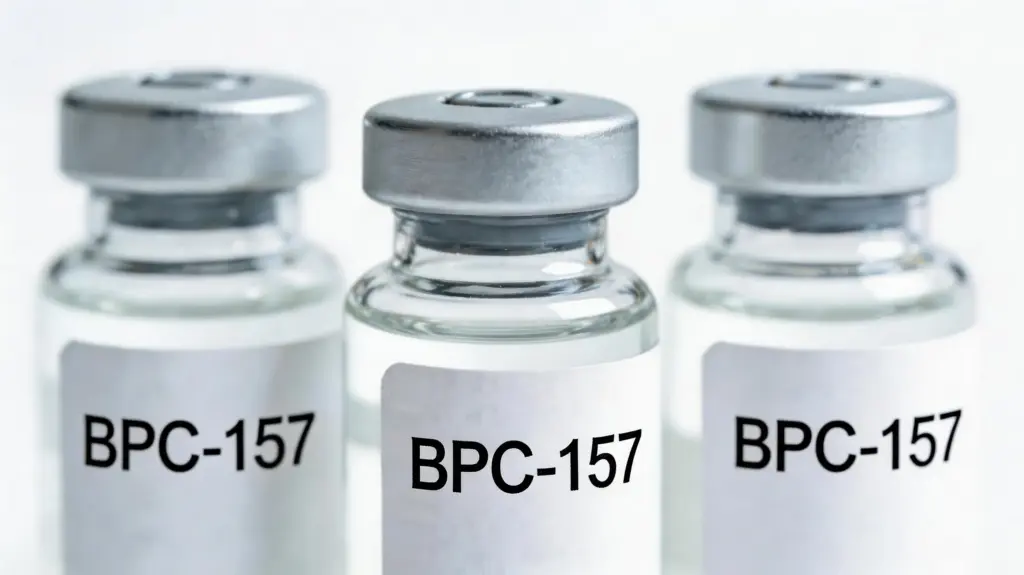
Yes — peptides are legal in New York, and the list of legally available ones is getting longer. Peptides are not controlled substances in New York or under federal law. Several are already legal to prescribe today through a licensed New York provider and a registered compounding pharmacy. Others, including BPC-157, are still working through the FDA’s approval pathway for compounding — and over July 23–24, 2026, BPC-157 cleared a major hurdle. The question worth asking isn’t whether peptides are legal. It’s which ones are available to you right now, and what’s coming next.
What happened on July 23–24, 2026?
The FDA’s Pharmacy Compounding Advisory Committee (PCAC) held a two-day meeting to review seven of the most widely used peptides: BPC-157, KPV, TB-500, MOTS-c, Emideltide, Epitalon, and Semax. The question was whether each should be added to the FDA’s 503A bulk drug substances list — the list that determines what a compounding pharmacy is allowed to use as an ingredient.
By the close of the second day, the committee had voted in favor of six of the seven — BPC-157, KPV, TB-500, MOTS-c, Epitalon, and Semax. Only emideltide, a sleep-related peptide, was voted down. BPC-157 passed 8 to 6 with one abstention on day one. For a category of medicine that has spent years in regulatory limbo, that is a real milestone — the first time a federal advisory panel has formally recommended that these peptides be made available through licensed pharmacies.
The votes weren’t unanimous, and they went against the recommendation of FDA’s own staff reviewers, who wanted more data on manufacturing consistency and human trials before signing off. Several committee members made the practical case that carried the day: patients are already using these compounds, and the realistic choice isn’t between peptides and no peptides — it’s between pharmacy-grade product prepared under controlled conditions and unregulated vials bought online.
One clarification worth making: peptides were never controlled substances, so nothing is being “rescheduled” or “decriminalized.” This is about the FDA’s compounding ingredient list — a separate framework that governs what licensed pharmacies may prepare. It’s a supply-chain question, not a criminal one.
The three tiers of peptides in New York right now
Most confusion about peptide legality clears up once you know which of these three groups a given peptide is in.
Tier 1 — Available now by prescription
Peptides on the FDA’s Category 1 list, and peptides that are components of approved drugs, can be legally compounded by a licensed 503A pharmacy on a patient-specific prescription. Sermorelin is the best-known example. A New York provider can prescribe these today, and a New York–registered pharmacy can fill them. This is ordinary, lawful medical practice, and it’s where peptide therapy already works well for the right patient.
Tier 2 — In the pipeline, including BPC-157
In 2023 the FDA placed roughly 20 peptides in Category 2 pending further review, which paused pharmacy compounding of them. BPC-157 is in this group today — but it is the group that is actively moving. The July 2026 vote applies here, and if the FDA finishes rulemaking, these peptides move into Tier 1 and become prescribable. Until that happens, no New York pharmacy can compound them.
Tier 3 — “Research use only” product
Vials sold online under a research label aren’t made to pharmaceutical standards and aren’t legal to sell for human use. This is the tier the FDA vote is designed to shrink, by giving patients a regulated alternative — which is the main reason a lot of clinicians want to see the pathway open up.
What the vote changes
An advisory committee recommendation isn’t a final rule, but it carries real weight, and the market read it clearly — shares of one telehealth company that testified in favor rose sharply the same day.
The FDA now has a formal, on-the-record recommendation to add BPC-157 and KPV to the 503A bulks list. Rulemaking on these substances is far more likely than it was a week ago.
Compounding pharmacies and prescribers have a concrete reason to build a legitimate supply chain.
Five other peptides — KPV, TB-500, MOTS-c, Epitalon, and Semax — were recommended alongside BPC-157, signaling broad committee support for the category.
What hasn’t changed yet
Being straight about this protects you. BPC-157’s Category 2 status is still in effect today, so it can’t be lawfully compounded in New York this week. The human evidence base also stays where it is until larger trials are run — FDA reviewers found one small ulcerative colitis trial reported as a conference abstract, plus several small studies in knee pain, interstitial cystitis, and healthy volunteers. And BPC-157 remains on the World Anti-Doping Agency prohibited list, which matters for any competing athlete regardless of how the rulemaking lands.
How close is BPC-157 to being prescribable?
Three of the five steps are done. Here’s the full path.
- Nomination and Category 2 review. Completed 2023. FDA flagged BPC-157 and roughly 19 other peptides for further evaluation, pausing compounding.
- Reclassification toward Category 1. April 2026. HHS Secretary Robert F. Kennedy Jr. reclassified twelve peptides as Category 1 substances — reported as the first regulatory step toward compounding eligibility.
- Advisory committee recommendation. July 23–24, 2026. PCAC voted in favor of six of the seven peptides reviewed, including BPC-157 (8–6–1). This is where things stand now.
- Proposed rule and public comment. Next. FDA publishes a proposed rule and takes public comment. Historically this takes months, not years.
- Final rule. At this point a New York–registered pharmacy can lawfully compound BPC-157 on a prescription, and peptide therapy becomes a fully standard part of practice.
What the science actually shows
Legal availability and clinical evidence are two different questions, and it’s worth being clear-eyed about both.
The preclinical work on BPC-157 is genuinely interesting. Across decades of animal studies it has been reported to accelerate healing of tendon, ligament, muscle, bone, and gut tissue; protect the liver and stomach against drug-induced injury; and promote angiogenesis — the growth of new blood vessels into healing tissue. Researchers have linked those effects to upregulation of growth factor receptors, including VEGFR2, and to nitric oxide signaling. That is a plausible mechanism, not just an anecdote.
The human data is thinner but reassuring on safety. In the clinical studies FDA identified — rectal enema dosing in healthy volunteers and ulcerative colitis patients, intra-articular injection for knee pain, intravesical injection for interstitial cystitis, and IV infusion in healthy subjects — no serious adverse events were reported. The most common side effects noted were headache and flatulence, at rates no different from placebo. Three adverse event reports appear in the FDA’s FAERS database through December 2025, all involving injectable product and none clearly attributable to BPC-157 itself.
What’s missing is scale. These were small, short studies, and there is no published human pharmacokinetic data for the routes most patients are interested in. That’s a gap the FDA is right to point at, and it’s a gap that legal compounding plus real trials would start to close. Skeptics argue the evidence isn’t there yet; proponents argue that waiting for perfect data while patients self-source from unregulated suppliers is its own kind of harm. Both positions are held by serious people.
Our read: promising mechanism, encouraging safety signal, incomplete efficacy data, and a regulatory path finally moving in the right direction. That’s a reason to pay close attention — and to have the conversation with a clinician rather than a checkout page.
Peptide therapy at Homesteady Health
Matthew Simone, FNP-BC works with peptide therapy as part of a broader approach to performance, recovery, and hormonal health at Homesteady Health in Trumansburg, 20 minutes from downtown Ithaca. That includes prescribing the peptides that are legally available today through licensed compounding pharmacies, and tracking the FDA’s rulemaking closely so that members are among the first to know when additional peptides — including BPC-157 — become available.
What a peptide consultation actually looks like here:
- An unhurried visit. Enough time to talk through your goals, training, injuries, sleep, and history — not a seven-minute slot and a questionnaire.
- Objective data. Discounted lab testing to look at the hormonal and metabolic picture underneath the symptom, so any recommendation is based on your numbers.
- A straight read on the evidence. What’s well supported, what’s promising, what’s still unproven, and where a given peptide fits for you specifically.
- Legal, pharmacy-grade sourcing. Prescriptions filled by licensed pharmacies registered with New York — with a clinician monitoring your response.
- Continuity. The same provider following you over time, adjusting as things change, reachable when you have a question.
Peptides also don’t exist in isolation. For a lot of patients, the recovery and energy complaints that lead them to peptides are being driven by something measurable and treatable right now — which is why a peptide conversation here usually starts with men’s hormonal health or women’s hormonal care and works outward from there. Sometimes peptides are the right addition. Sometimes optimizing the foundation gets you most of the way there. You’ll get an honest answer either way.
Book a free consultation to talk through peptide therapy, or see what’s included in membership. Members will be notified as soon as newly cleared peptides become available.
How New York’s rules work alongside the FDA’s

Federal law sets the floor; New York adds its own requirements. Knowing them is mostly useful for telling a legitimate provider from a questionable one.
Pharmacies answer to the NYS Board of Pharmacy
Compounding in New York is regulated under Education Law Article 137, administered by the New York State Board of Pharmacy within the NYSED Office of the Professions. Legitimate pharmacies operate well inside those lines.
Out-of-state pharmacies must register here
Any pharmacy outside New York that ships prescription drugs to New York patients must register as a nonresident establishment under Education Law §6808-b and 8 NYCRR §63.8. Your provider should be able to tell you exactly which pharmacy fills your prescription.
A real prescription requires a real clinical relationship
New York requires a licensed prescriber who has actually evaluated you and takes responsibility for your care. That’s a feature, not a hurdle — it’s the difference between someone monitoring your response and a website taking your card. It’s also why our practice is built around direct access to one provider.
Peptides aren’t scheduled substances
Peptides are not controlled substances under New York’s Public Health Law Article 33 or the federal Controlled Substances Act. There’s no DEA registration requirement, no prescription monitoring program reporting, and no special licensing hurdle for your provider — which is part of why peptide therapy can move quickly once the FDA opens the compounding pathway.
Where can New Yorkers legally get peptides?
Four common routes, and how each holds up as of July 2026.
A New York provider plus a Category 1 peptide from a licensed pharmacy — legal today. The clean path. Prescription-based, pharmacy-grade, traceable, and monitored.
A Category 2 peptide such as BPC-157 — not yet, but moving. A prescription can’t authorize a pharmacy to compound an ingredient still pending FDA rulemaking. This is exactly what the July vote is expected to change.
Online “research use only” vials — not for human use. Not made to pharmaceutical standards and not legally sold for human consumption.
Oral peptide supplements — sold legally, unevaluated. BPC-157 is marketed as a supplement ingredient. There’s no USP monograph for it, and supplement claims aren’t reviewed before sale.
What we can work on while the rulemaking finishes
If you came here hoping to start BPC-157 this month, the honest answer is not yet — but that doesn’t mean waiting around. Most people looking at peptides are chasing something specific: slow recovery, flat energy, stubborn weight, poor sleep, low drive. Those have causes that can be measured and treated right now, and addressing them makes any future peptide protocol work better.
- Fatigue, weight gain, and low energy in men. Symptoms alone aren’t a diagnosis — here’s what to rule out first.
- Low testosterone, or burnout? They look nearly identical from the outside. How to tell them apart.
- Testosterone therapy. When labs and symptoms line up, TRT is well studied and available now — including what it actually costs in Ithaca and how the therapy works.
- Low libido, fatigue, and brain fog in women. Often a testosterone deficiency women are rarely told about.
- Perimenopause with normal labs. Normal bloodwork doesn’t rule it out — timing and symptom pattern matter as much as the number.
Build the foundation now, and you’re in a much better position to add peptides the day they’re cleared.
Peptides and New York law — frequently asked questions
Are peptides legal in New York?
Yes. Peptides are legal in New York and are not controlled substances under New York’s Public Health Law Article 33. Several peptides can be prescribed today by a licensed New York provider and compounded by a registered pharmacy. Others, including BPC-157, are still completing the FDA’s compounding approval pathway.
Is BPC-157 legal in New York in 2026?
BPC-157 is not a controlled substance, so possessing it is not illegal. It currently sits in FDA Category 2, which means licensed pharmacies cannot yet compound it. On July 23, 2026, an FDA advisory committee voted 8–6 with one abstention to recommend adding it to the 503A bulks list. Once the FDA completes rulemaking, BPC-157 is expected to become available by prescription through licensed compounding pharmacies.
Can a nurse practitioner in New York prescribe peptides?
Yes. A New York–licensed provider, including a nurse practitioner, can prescribe any peptide that is legally available for compounding, and a registered pharmacy fills it on a patient-specific prescription. Matthew Simone, FNP-BC prescribes peptide therapy at Homesteady Health for patients across the Finger Lakes. Start with a consultation to find out what fits your situation.
Where can I get peptide therapy near Ithaca, NY?
Homesteady Health in Trumansburg, about 20 minutes from downtown Ithaca, offers peptide therapy as part of its Direct Primary Care membership, alongside hormone and metabolic care. Evaluation includes an unhurried visit, discounted labs, and prescriptions filled through licensed pharmacies. Book a free consultation.
Why do peptide websites say “research use only”?
That labeling keeps sellers outside the drug approval system. Products labeled for laboratory research aren’t made to pharmaceutical standards and can’t legally be marketed for human use. Opening the compounding pathway is what gives patients a regulated alternative, which is the point of the FDA’s current review.
Can I order peptides from an out-of-state telehealth company into New York?
Yes, if three things are true: the prescriber is licensed in New York, the pharmacy is registered with New York as a nonresident establishment under Education Law §6808-b, and the peptide is one federal law currently permits a pharmacy to compound. Any legitimate provider can confirm all three.
Which peptides can be legally compounded in New York right now?
Peptides on the FDA’s Category 1 list and peptides that are components of FDA-approved drugs — sermorelin being the most familiar example. The list is actively changing in patients’ favor right now, so the current answer is worth confirming with your provider.
Is BPC-157 safe?
In the human studies FDA identified — covering rectal, intra-articular, intravesical, and intravenous administration — no serious adverse events were reported, and the most common side effects were headache and flatulence at rates comparable to placebo. Animal toxicology found no mutagenicity and no teratogenic effect. Those human studies were small and short, so the safety picture is encouraging rather than definitive, and it’s a conversation worth having with a clinician who can weigh it against your own history.
Are peptides banned in sports?
BPC-157 appears on the World Anti-Doping Agency prohibited list under non-approved substances (S0). Athletes subject to WADA, NCAA, or similar testing should assume a positive result regardless of how the peptide was obtained.
Is peptide therapy covered by insurance in New York?
Usually not. Compounded peptides are rarely covered. That’s one reason membership-based care works well here — visits are included and labs are discounted rather than billed per test. We break down what care costs without insurance in New York if you want the numbers.
Talk it through with someone who follows this closely
Peptide regulation is moving quickly, and it’s moving toward access. If you want a clinician who is tracking that process and can tell you honestly what’s available today, what’s coming, and whether it makes sense for you, that’s the conversation we have here every week. We’re accepting new patients across Tompkins County and the Finger Lakes. See everything included in membership, read common questions about how we work, or book a free consultation.
About the author. Matthew Simone, FNP-BC is the founder of Homesteady Health and a board-certified Family Nurse Practitioner with more than 25 years across family medicine, emergency, and urgent care. He was named Nurse Practitioner of the Year in 2025 and serves as President of Region 2 of the Nurse Practitioner Association of New York. He provides peptide, hormone, and metabolic therapy to patients throughout the Finger Lakes. Based in Trumansburg, he lives the active Finger Lakes lifestyle and built Homesteady Health to practice medicine the way it should be — unhurried, continuous, and centered on the patient in front of him. See our network and affiliations.
This article is general health and regulatory information, not legal advice or a treatment recommendation. Regulatory status described here is current as of July 24, 2026 and is actively changing. Peptide therapy should be discussed with a licensed clinician who can evaluate your individual situation.