

The short answer: testosterone replacement therapy typically costs $75–$200 per month all-in when it’s done properly through a local provider — and the medication itself is usually the cheapest part. The price swings you see online come from everything wrapped around it: labs, follow-up visits, add-on medications, and membership fees that vary wildly between clinics.
If you’ve been searching “how much does TRT cost,” you’ve probably noticed the answers are all over the map — anywhere from $30 a month to $500 a month, depending on who’s quoting and what they’re leaving out.
Here’s the honest version, with real numbers, written for men here in Ithaca, Trumansburg, and the surrounding Finger Lakes towns.
Below is the full breakdown — by month, by delivery method, with and without insurance — plus what TRT costs at HomeSteady Health in Trumansburg, just 20 minutes from downtown Ithaca.
Key takeaways
- TRT typically costs $75–$200 per month all-in through a local provider; the medication is usually the cheapest part.
- At HomeSteady Health in Ithaca/Trumansburg, TRT is $149/month including standard medication and supplies, after a $250 initial consult.
- Cash-pay TRT is often more predictable — and sometimes cheaper — than running it through a high-deductible insurance plan.
- Injections are usually the best value; gels and pellets cost more.
- The most expensive TRT is the TRT you didn’t need — start with an evaluation, not a prescription.
TRT Cost Per Month: What You’re Actually Paying For
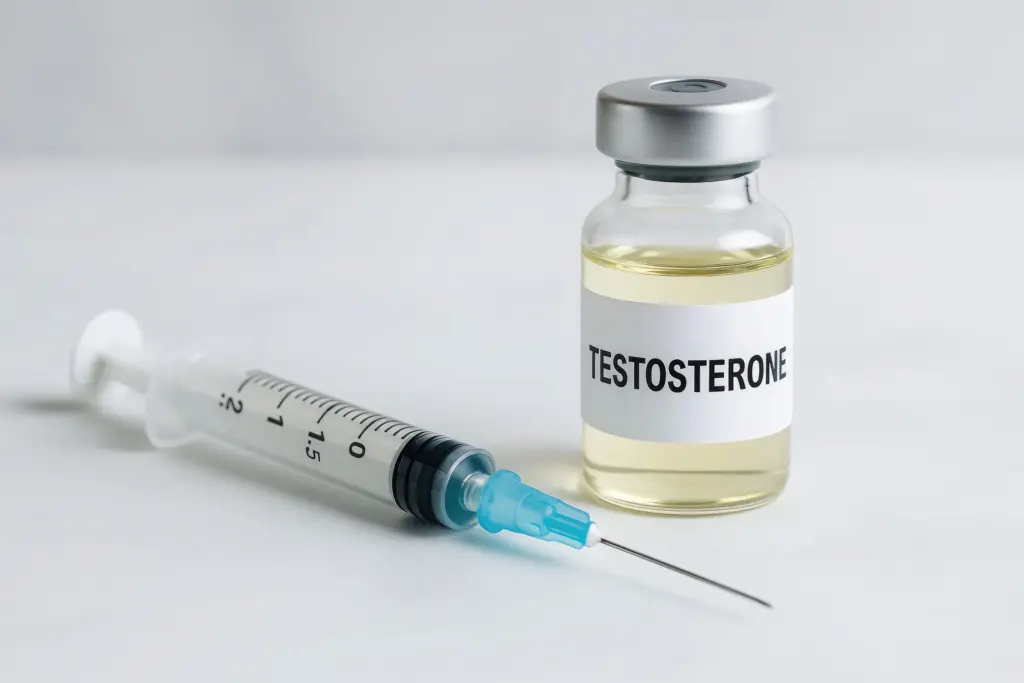
TRT costs per month typically break down into four parts: the testosterone medication ($30–$100), lab work, clinical oversight, and supplies. When a clinic quotes you a monthly TRT cost, that number should cover four things. If it doesn’t, expect surprise bills later.
1. The testosterone itself — $30–$100/month cash. Generic testosterone cypionate (the most common injectable form) is inexpensive. At cash-pay pharmacy prices, a month’s supply typically runs $30–$100 depending on dose and pharmacy. This is the part that shocks most men: the medication is cheap. The markup is everywhere else.
2. Lab work — $50–$300+ per panel, several times in year one. Proper TRT requires bloodwork before you start, again at 6–12 weeks, and then periodically – often every 3–6 months – to monitor levels, blood counts, and prostate markers. At hospital-system lab pricing in the Ithaca area, a full hormone panel can run into the hundreds. Through direct-pay lab arrangements, the same panel is often a fraction of that — we covered why in our post why healthcare costs so much before insurance kicks in.
3. Clinical oversight — the visit fees or membership. Someone qualified must evaluate whether you actually need TRT, prescribe it, adjust your dose, and catch problems early. This is where clinic models differ most: per-visit billing, monthly memberships, or bundled “programs.”
4. Supplies or add-ons. Syringes and needles are a few dollars a month. Some clinics also add other medications to the protocol — each one adds cost, and not every man needs them.
Typical all-in monthly cost:
| Setup | Realistic monthly cost |
|---|---|
| Local provider, cash-pay, injections | Up to $200+ per month, all in |
| Online TRT clinics | $150–$400/month |
| Hospital system, billed through insurance | $0–$150/month after deductible — but often far more before it |
| Pellet therapy | $150–$300/month equivalent (billed per insertion) |
| HomeSteady Health (Trumansburg/Ithaca) | $149/month flat — standard medication AND supplies included. |
TRT Cost With Insurance vs. Without Insurance
With insurance: If your labs clearly show low testosterone by your insurer’s criteria, insurance may cover the medication itself with a modest copay. What trips men up is everything around it — the diagnostic visits, repeat labs, and monitoring often get billed toward your deductible first. With the high-deductible plans most common in Tompkins County, “covered” can still mean paying full price out of pocket until you hit several thousand dollars. And if your levels are borderline — low enough to cause symptoms, not low enough for the insurer’s cutoff — coverage is frequently denied altogether. The reality to this is, unless your testosterone levels are extremely low, insurance coverage is highly unlikely.
Without insurance: cash-pay TRT is more predictable than most men expect. Medication ($30–$100), direct-pay labs, and a flat fee for clinical oversight. No prior authorizations, no denial letters, no waiting on an insurer to agree that your symptoms count. For a lot of men in the Ithaca area, the cash route ends up cheaper than running it through a high-deductible plan — and dramatically simpler.
This is the same math that’s driving the shift to direct care generally — see how direct primary care saves money compared to traditional insurance.
TRT Cost by Delivery Method
TRT cost varies by delivery method: injections are the cheapest, gels and creams cost more, and pellets are the priciest. Injections — usually the best value. Testosterone cypionate injections, self-administered weekly at home after a quick teaching visit, are the workhorse of TRT: effective, adjustable, and the cheapest form at $30–$100/month for the medication.
Gels and creams — convenient, pricier. Daily topical testosterone avoids needles but typically costs more ($50–$300/month depending on brand vs. compounded), transfers to skin contact (a real consideration with kids at home), and absorbs inconsistently for some men.
Pellets — the premium option. Implanted under the skin every 3–4 months, pellets run roughly $500–$1,000 per insertion. The appeal is set-it-and-forget-it; the tradeoffs are cost, a minor procedure each time, and no way to adjust the dose once they’re in.
There’s no single “right” method — dose and delivery should follow your labs, your lifestyle, and your response, which is exactly what an individualized men’s health evaluation is for.
What TRT Costs at HomeSteady Health (Trumansburg / Ithaca)
We built our men’s health program to remove the cost games. Straight answers, flat pricing, no surprise line items.
- Initial men’s hormone consultation: $250 — a full hour with hormone expert Matthew Simone, FNP-BC: detailed history, exam, and lab draw on site. Not a 7-minute visit and a prescription.
- Ongoing TRT: $149/month, all-in — and unlike most quotes you’ll see, that number includes your standard medication and supplies. No separate pharmacy bill, no syringe run-arounds, no surprise line items. If your protocol ever calls for additional medications beyond the standard regimen, those are the only thing that adds to the cost — and we’ll tell you the price before anything is prescribed.
- Labs at direct-pay pricing — typically a fraction of hospital-system rates.
- Telehealth follow-ups available across New York State — start in person in Trumansburg, follow up from anywhere from Lansing to Watkins Glen without leaving work early.
Compare that against the table above: $149/month with medication and supplies included lands below what most online TRT clinics charge for management alone — with an in-person exam, on-site labs, and a clinician 20 minutes away instead of a chat window.
We’re located in Trumansburg, about 20 minutes from downtown Ithaca and Cornell, with statewide telehealth for follow-up care. No referral needed, and you don’t need to be an existing patient to book a consultation.
Book a men’s health consultation →
Before You Pay for Anything: Make Sure You Actually Need TRT

The most expensive TRT is the TRT you don’t need.
Fatigue, low drive, stubborn weight, and brain fog have many causes — sleep, stress, thyroid, and lifestyle among them. Some online clinics will start nearly anyone on testosterone; a proper evaluation rules out the cheaper, simpler explanations first. If you’re not sure your symptoms point to low T at all, you may want to check out our content covering whether you really have low-T or are just burned out and why symptoms alone aren’t a diagnosis.
And if you’re reading this on behalf of someone who won’t book the appointment himself, this one’s for you: How to Help the Man You Love Take His Health Seriously.