
The short version: If you can’t find a primary care doctor accepting new patients near Ithaca, it’s not you — it’s a national physician shortage that hits smaller cities hardest. Your fastest option is often a direct primary care practice like HomeSteady Health in Trumansburg (about 20 minutes from Ithaca), which is currently accepting new patients, typically within days. In New York, an experienced board-certified nurse practitioner can serve as your primary care provider.
Key takeaways
- Primary care shortages near Ithaca are driven by a national physician shortage, not local mismanagement.
- Before joining any practice, check: real new-patient wait time, visit length, how you reach your provider, continuity, and cost to use.
- In New York, an experienced nurse practitioner (FNP-BC) can be your primary care provider — research shows comparable primary-care outcomes.
- Direct primary care (a flat monthly fee, no per-visit billing) is an often-overlooked way to get seen quickly, with or without insurance.
- HomeSteady Health in Trumansburg is currently accepting new patients, typically within days.
If you’ve typed “primary care doctor accepting new patients near me” from anywhere around Ithaca lately, you already know how this usually goes: the websites say “not accepting new patients,” the phone lines say “we can put you on the wait list,” and the first available new-patient appointment is months out.
You’re not doing it wrong. That’s genuinely the state of primary care in Tompkins County right now — and across most of upstate New York.
This guide covers three things: why it’s so hard to find primary care here, what to actually check before you join a practice, and an option many Ithaca-area families haven’t considered: a board-certified nurse practitioner.
Why It’s So Hard to Find a Primary Care Doctor Near Ithaca
The shortage is real, and it isn’t local mismanagement — it’s national math. The Association of American Medical Colleges projects a shortfall of 20,200–40,400 primary care physicians by 2036, and roughly a third of today’s physician workforce reaches retirement age within the next five years. Federal health officials count more than 7,000 designated primary care shortage areas — home to some 74 million Americans — and rural counties and smaller cities feel it first and worst. Around Ithaca, that shows up as practices closed to new patients, long waits for a first appointment, and 15-minute visits once you finally get in.
The result: Many people here technically “have” insurance and still don’t have a usable relationship with a primary care provider. When something comes up, they end up at urgent care or the ER by default — the most expensive and least personal way to get care. We wrote about that trap in paying for healthcare but still struggling to use it.
What to Check Before You Join Any Practice
Before choosing a primary care practice, check five things: whether they’re truly accepting new patients and how soon, how long visits are, how you reach the provider between visits, whether you see the same clinician each time, and what it costs to actually use. Whoever you choose — physician, nurse practitioner, or physician associate; hospital system or independent practice — these five questions predict what your experience will be like:
- Are they actually accepting new patients — and how soon? “Accepting new patients” with a four-month first appointment isn’t meaningfully accepting. Ask for the real date.
- How long are visits? The difference between a 15-minute slot and a 30- to 60-minute visit is the difference between refills and real medicine.
- How do you reach them between visits? Portal messages answered in days? A phone tree? Or can you text or call your actual provider?
- Who do you actually see? In many large practices you’re seen by whoever is available. Continuity — the same clinician who knows your history — is one of the best-documented predictors of good outcomes. Oftentimes, quicker access in Ithaca means a first or second year resident, not a seasoned, accomplished PCP. Always ask about the doctor you are assigned to.
- What does it cost to use? Copays, deductibles, and surprise lab bills decide whether you’ll actually go. If cost keeps you from booking, the practice isn’t working for you — whatever your card says.
Do You Need a Doctor — or Do You Need Primary Care?

Here’s the part most “find a doctor” guides won’t say plainly: What most people are searching for isn’t a specific credential. It’s someone qualified who knows them, has time for them, and is reachable when something’s wrong.
In New York, that someone can be a nurse practitioner. And since we’re about to suggest one, let’s be completely transparent about what that means.
FNP-BC vs. Physician: The Honest Comparison
Matthew Simone, the founder of HomeSteady Health, is not a physician. He is a board-certified Family Nurse Practitioner (FNP-BC). Those are different training paths, and you deserve the difference stated plainly:
| Comparison point | Physician (MD/DO) | Nurse Practitioner (FNP-BC) |
|---|---|---|
| Training path | Medical school + residency (7+ years post-college) | Nursing degree + graduate NP program + national board certification, built on clinical nursing experience |
| Can serve as your PCP in NY? | Yes | Yes — NY nurse practitioners evaluate, diagnose, order and interpret tests, and prescribe; experienced NPs practice without a written physician agreement or required supervision |
| Scope | Full medical scope incl. specialty/surgical paths | Full primary care scope; refers to physician specialists when a problem needs one — exactly as a physician PCP does |
| What research shows | — | Decades of studies find comparable primary-care outcomes and patient satisfaction for NP-led care |
What the table can’t show is the individual. Matt brings more than 25 years of clinical experience across family medicine, emergency, and urgent care. He was named Nurse Practitioner of the Year in 2025 and serves as President of Region 2 of the Nurse Practitioner Association of New York — you can read his full background on the team page.
The honest bottom line: For primary care — prevention, chronic conditions, everyday illness and injury, and knowing when you need a specialist — an experienced, board-certified NP with an hour for you will serve most families better than any credential you can’t get an appointment with.
The Option Most Ithaca Searches Miss: Direct Primary Care
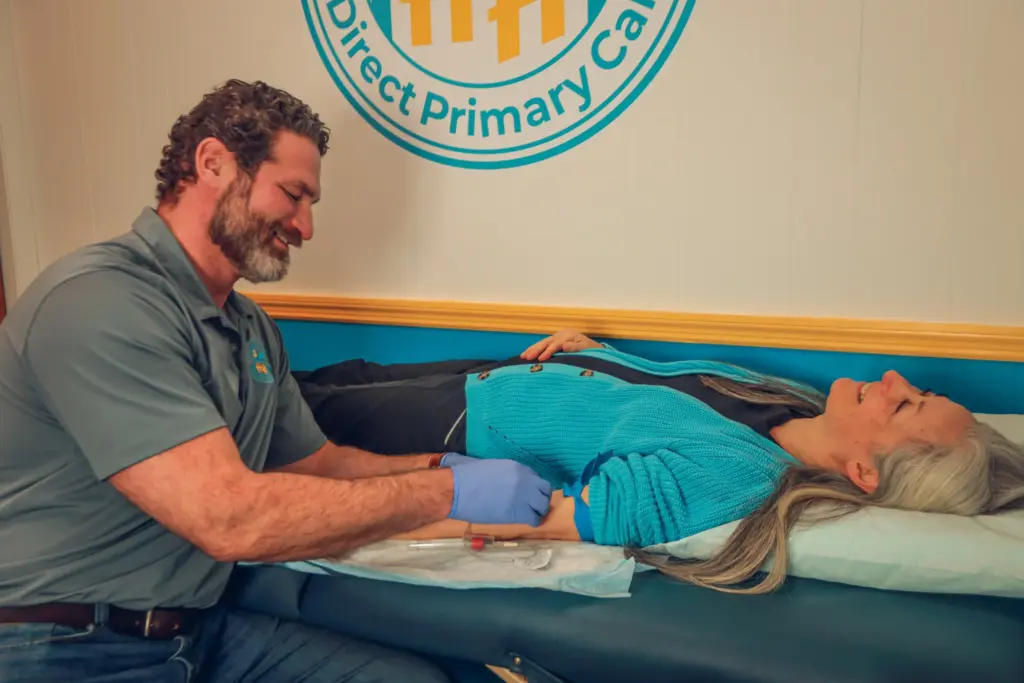
HomeSteady Health in Trumansburg — about 20 minutes from downtown Ithaca and Cornell — runs on a different model called direct primary care (DPC). Instead of billing insurance per visit, members pay a flat monthly fee that covers most primary and urgent care. No copays, no per-visit charges, no surprise bills.
For someone searching “doctors accepting new patients near me,” here’s what that model changes:
| What you’re used to | What membership looks like |
|---|---|
| Months-long wait for a new-patient appointment | Currently accepting new patients — typically seen within days, not months |
| 15-minute visits with whoever’s available | 30- to 60-minute visits with the same provider every time |
| Phone trees and portal delays | Call or text your provider directly |
| Office visits only | Office visits and telehealth across New York State |
| Copays, deductibles, surprise lab bills | Flat monthly fee; labs at direct-pay pricing |
Membership details and pricing are on the membership page, and the model works with or without insurance. Members can pair their membership with a high-deductible health insurance plan for emergencies, and those without coverage use it as their front door to care. If you’re weighing that math, read more on what a doctor visit costs without insurance in New York.